
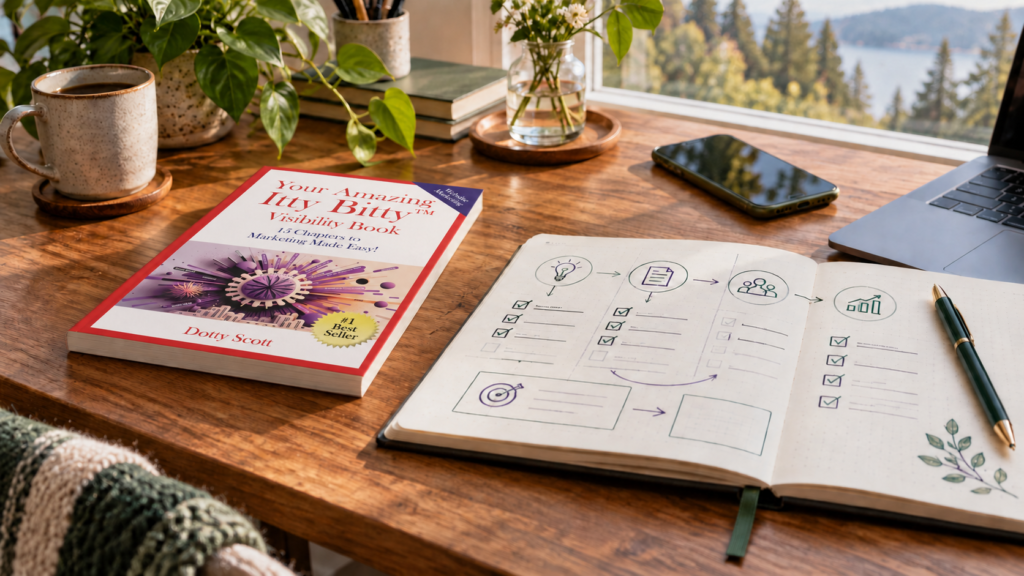
Writing a book and marketing a book are two different jobs.
In fact, that is the part many authors discover after the book is finished.
You can spend months or years getting every word right, upload the book to Amazon, announce it a few times, and then wonder why sales slow down. However, the problem is not automatically the book. Often, there simply is not a clear path helping the right reader find it, understand why it matters, and decide to buy it.
So… that path is your book marketing plan.
It does not need to be twenty pages long. You do not need complicated software, a huge advertising budget, or a daily presence on every social platform.
What it needs is focus.

Key Takeaways
- Start with the reason your book exists, not a list of promotional tasks.
- Define one ideal reader so she can recognize that the book was written for her.
- Give the book a clear home on your website instead of relying on Amazon to tell the whole story.
- Make the buying path obvious and test every purchase link.
- Choose a few visibility channels you can maintain consistently.
- Use the book’s stories, questions, and lessons as ongoing content.
- Measure actions connected to your goal, not likes alone.
Table of Contents
- Start With Why You Wrote the Book
- Know Your Ideal Reader
- Give the Book a Home on Your Website
- Make the Buying Path Obvious
- Choose a Few Ways to Stay Visible
- Talk About the Book Without Repeating the Same Sales Post
- Ask for Reviews Without Making It Awkward
- Build a Plan You Will Actually Use
- Measure What Matters
- Your Book Deserves More Than a Launch Week
- A Simple Book Marketing Plan
Start With Why You Wrote the Book
Before you make a list of marketing tasks, go back to the reason the book exists.
What did you want the reader to understand, feel, question, or do after reading it?
This matters because the strongest marketing does not begin with, “Please buy my book.” It begins with the problem, idea, experience, or possibility the book helps the reader explore.
If your book helps women move through self-doubt, talk about the questions that keep them stuck. For a book that teaches a practical skill, explain the problem that skill solves. When you tell a personal story, share the larger truth that made the story worth telling.
Your book is the product. However, the reason behind it is what creates the connection.
Know Your Ideal Reader
“Everyone” is not a useful answer.
I know it is tempting. You worked hard on the book, and you do not want to leave anyone out. But when your marketing tries to speak to everyone, it usually becomes too broad for anyone to recognize themselves in it.
Describe one person who would benefit from this book.
- What is happening in her life right now?
- Which question keeps following her around?
- What has she already tried?
- When would she stop scrolling and pay attention?
- How would she describe what she wants?
In other words, you are not excluding other readers. You are giving the right reader a reason to say, “This was written for me.”
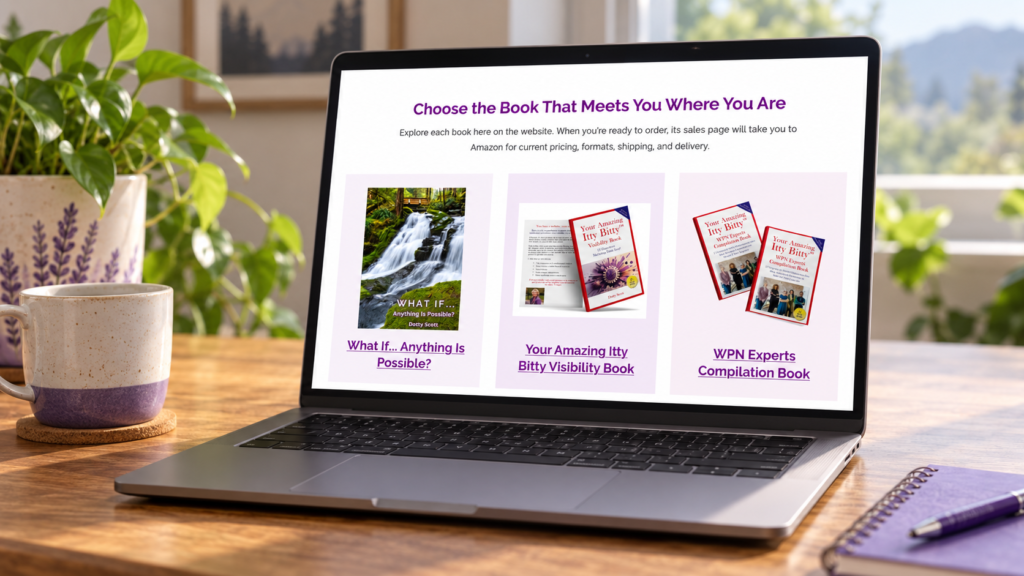
Give the Book a Home on Your Website
Amazon is where someone may buy your book. It should not be the only place where the book is explained.
Your website gives you room to tell the story Amazon cannot tell well.
A useful book page should answer:
- Who is this book for?
- What will the reader get from it?
- Why did you write it?
- What makes it different?
- Where can someone buy it?
In addition, it can include the cover, a short excerpt, reader comments when you have them, related speaking topics, and answers to common questions.
Most importantly, you control the page. You can update it, link to it from every interview or social post, and use it as the central hub for the book.
You can see how I organize my own titles on my Books page.
Make the Buying Path Obvious
Do not make people hunt for the button.
If the book is sold on Amazon, say that clearly. Use a button that tells the reader exactly what happens next, such as “Buy on Amazon.”
Then test the link.
That sounds almost too simple to mention, but broken buttons, outdated preorder links, and confusing product pages quietly lose sales. As a result, every extra decision gives the reader another chance to leave.
Keep it simple: one page, one clear promise, and one obvious next step.
Choose a Few Ways to Stay Visible
You do not need to be everywhere.
To be honest with you, trying to show up on every platform is one of the fastest ways to make book marketing feel like a second full-time job.
Choose the channels you can maintain and the places your ideal reader already pays attention.
Your plan might include:
- An email to your existing list
- Short stories or lessons connected to the book
- Questions pulled from the book
- Podcast interviews or speaking opportunities
- Guest articles
- Videos that introduce one idea at a time
- Occasional reminders that include a direct buying link
Ultimately, consistency matters more than trying every tactic once.
A book rarely needs one enormous burst of attention. It needs repeated opportunities to be discovered.
Talk About the Book Without Repeating the Same Sales Post
Many authors announce the book, share the cover, post the purchase link, and then run out of things to say.
The book itself contains the answer.
Pull out the stories, questions, lessons, mistakes, observations, and behind-the-scenes decisions that shaped it. Each one can become a post, email, video, interview topic, or conversation.
For example, you can share:
- The moment you knew the book needed to exist
- A belief that changed while you were writing it
- A question from one chapter
- A common misconception the book addresses
- Something that almost did not make the final version
- One practical action a reader can take today
So… stop thinking of marketing as repeating, “My book is available.”
Instead, marketing is continuing the conversation the book started.
Ask for Reviews Without Making It Awkward
In addition, reviews help future readers decide whether the book is right for them.
Do not wait and hope people remember to leave one. Ask clearly and make the process easy.
You can add a short request to your follow-up email, include a reminder on the book page, or send a personal note to a reader who tells you the book helped them.
Keep the request honest. You are asking for their experience, not a perfect rating or a specific response.
After all, a thoughtful review in the reader’s own words is more useful than exaggerated praise.
Build a Plan You Will Actually Use
After all, a simple one-page plan is better than a complicated document you never open again.
Write down:
- The primary goal for the next ninety days
- The ideal reader you want to reach
- The main message you want her to understand
- The link where you will send people
- The two or three channels you will use
- The content you can create from the book
- The actions you will repeat each week
- The result you will measure
Your goal might be book sales. It might also be email subscribers, speaking inquiries, podcast invitations, or conversations about a larger body of work.
Choose the goal before choosing the tactics.
Otherwise, it is easy to stay busy without knowing whether anything is working.
Measure What Matters
Likes can feel good. They do not always tell you whether someone clicked, joined your list, invited you to speak, or bought the book.
Pay attention to results connected to your goal.
That may include:
- Visits to the book page
- Clicks on the purchase button
- Book sales
- Email-list growth
- Review activity
- Speaking or interview inquiries
Then look for patterns.
Which story made people respond? Did a particular email create more clicks? Perhaps one interview continued sending visitors weeks later.
So… keep what works. Adjust what does not. Do not rebuild the entire plan because one post fell flat.
Your Book Deserves More Than a Launch Week
A launch can create momentum, but it is not the entire marketing plan.
The real opportunity comes from continuing to connect the book to relevant conversations long after the first announcement.
After all, books do not expire after thirty days.
A reader can discover your work six months from now, two years from now, or because one honest story reached her on exactly the right day.
That is why your plan should be sustainable.
You are not trying to shout louder than everyone else. You are making it easier for the right person to find the book you wrote for her.
A Simple Book Marketing Plan
If you are staring at a blank page, start here:
- Define the reader. Know who needs the book and why.
- Name the promise. Explain what the reader will understand, feel, or be able to do.
- Create the home base. Build one clear page on your website.
- Make buying easy. Use an obvious, tested purchase link.
- Choose your channels. Focus on the places you can consistently show up.
- Use the book as content. Share its stories, questions, and lessons.
- Ask for honest reviews. Give readers a simple reminder.
- Track meaningful results. Measure actions connected to your goal.
- Keep going. Give the book more than one week to find its readers.
Perfect does not sell books.
Clear and consistent gives them a chance.